Showing posts with label car. Show all posts

Friday, February 25, 2011

2012 Mercedes-Benz SLK-Class Roadster

2012 Mercedes-Benz SLK-Class Roadster

2012 Mercedes-Benz SLK-Class Roadster
For the first time Mercedes-Benz is offering a choice of three variants of the lightweight-construction vario-roof for the new SLK: in just a few seconds this feature transforms the roadster into a coupe with a “fixed” roof at the touch of a button – and vice versa: The standard version is a roof painted in the vehicle color. Optionally available is a panorama vario-roof with dark-tinted glass. The third option is a world premiere – the panorama vario-roof with MAGIC SKY CONTROL. This glass roof switches to light or dark at the press of a button. In light mode it is virtually transparent, offering an open-air experience even in cold weather. In its dark state the roof provides welcome shade and prevents the interior from heating up from the sun’s rays. In other words: a comfortable atmosphere at the touch of a button.

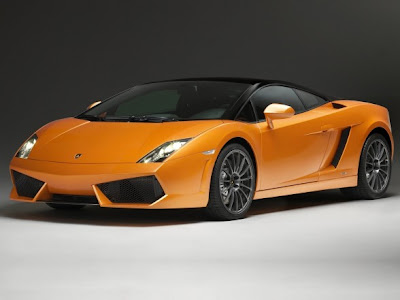
Lamborghini Gallardo LP560-4 Bicolore

2011 Lamborghini Gallardo LP560-4 Bicolore

2011 Lamborghini Gallardo LP560-4 Bicolore
The Lamborghini Gallardo LP560-4 Bicolore, a Special Edition supersports car which will be produced for the European and Asian-Pacific markets, while for the American market it will be only available in the version LP550-2.

Mitsubishi Outlander Sport Powertrains 2011

Mitsubishi Outlander Sport Powertrains 2011

Mitsubishi Outlander Sport Powertrains 2011
Power transmission for 2011 Mitsubishi Outlander Sport is a line of 2.0-liter 4-cylinder that produces 148 horsepower and 145 lb.-ft. of torque. The standard transmission is offered in the ES is a five-speed manual. A continuously variable transmission (CVT) is optional and is standard on SE models. Front wheel drive is standard with all-wheel drive available on the SE. As with standard AWD Outlander models feature three pilot selectable modes to optimize traction.
2011 Mitsubishi Outlander Sport
Edmunds tests in a front-wheel drive Outlander Sport with manual transmission accelerates from zero to 60 mph in 8.8 seconds. It is a time fast enough, but the most commonly installed CVT hope that sport becomes a little average performance. The EPA estimated fuel economy of 25 mpg city/31 highway and 27 mpg in combined driving a front-drive automatic model. The manual has suffered 24/31/26 mpg, while IT gets to 24/29/26 mpg.

Wednesday, November 24, 2010

Car History and images

The first working steam-powered vehicle was probably designed by Ferdinand Verbiest, a Flemish member of a Jesuit mission in China around 1672. It was a 65 cm-long scale-model toy for the Chinese Emperor, that was unable to carry a driver or a passenger. It is not known if Verbiest's model was ever built.
In 1752, Leonty Shamshurenkov, a Russian peasant, constructed a human-pedalled four-wheeled "auto-running" carriage, and subsequently proposed to equip it with odometer and to use the same principle for making a self-propelling sledge.

Nicolas-Joseph Cugnot is often credited with building the first self-propelled mechanical vehicle or automobile in about 1769, by adapting an existing horse-drawn vehicle. However, this claim is disputed by some who doubt Cugnot's three-wheeler ever ran or was stable.[citation needed] In 1801, Richard Trevithick built and demonstrated his Puffing Devil road locomotive, believed by many to be the first demonstration of a steam-powered road vehicle. It was unable to maintain sufficient steam pressure for long periods, and was of little practical use. In the 1780s, a Russian inventor of merchant origin, Ivan Kulibin, developed a human-pedalled, three-wheeled carriage with modern features such as a flywheel, brake, Transmission, and bearings; however, it was not developed further. In 1807 Nicéphore Niépce and his brother Claude probably created the world's first internal combustion engine which they called a Pyréolophore, but they chose to install it in a boat on the river Saone in France. Coincidentally, in 1807 the Swiss inventor François Isaac de Rivaz designed his own 'internal combustion engine' and used it to develop the world's first vehicle, to be powered by such an engine. The Niépces' Pyréolophore was fuelled by a mixture of Lycopodium powder (dried Lycopodium moss), finely crushed coal dust and resin that were mixed with oil, whereas de Rivaz used a mixture of hydrogen and oxygen. Neither design was very successful, as was the case with others, such as Samuel Brown, Samuel Morey, and Etienne Lenoir with his hippomobile, who each produced vehicles (usually adapted carriages or carts) powered by clumsy internal combustion engines.
In November 1881, French inventor Gustave Trouvé demonstrated a working three-wheeled automobile powered by electricity at the International Exposition of Electricity, Paris.

Car
Car

Car
Car

Car
Car

Car
Car

Car
Car

Car
Car

Car
Car

Car
Car

Car
Car

Car
Car

Car
Car

Car
Car

Car
Car


Although several other German engineers (including Gottlieb Daimler, Wilhelm Maybach, and Siegfried Marcus) were working on the problem at about the same time, Karl Benz generally is acknowledged as the inventor of the modern automobile.
An automobile powered by his own four-stroke cycle gasoline engine was built in Mannheim, Germany by Karl Benz in 1885, and granted a patent in January of the following year under the auspices of his major company, Benz & Cie., which was founded in 1883. It was an integral design, without the adaptation of other existing components, and included several new technological elements to create a new concept. He began to sell his production vehicles in 1888.


In 1879, Benz was granted a patent for his first engine, which had been designed in 1878. Many of his other inventions made the use of the internal combustion engine feasible for powering a vehicle.
His first Motorwagen was built in 1885, and he was awarded the patent for its invention as of his application on January 29, 1886. Benz began promotion of the vehicle on July 3, 1886, and about 25 Benz vehicles were sold between 1888 and 1893, when his first four-wheeler was introduced along with a model intended for affordability. They also were powered with four-stroke engines of his own design. Emile Roger of France, already producing Benz engines under license, now added the Benz automobile to his line of products. Because France was more open to the early automobiles, initially more were built and sold in France through Roger than Benz sold in Germany.

Car
Car


Tuesday, February 9, 2010

New Mégane Coupé Cabriolet with Elegant Interior Design

New Renault Megane 2010 reviewNew Mégane Coupé-Cabriolet completes the renewal style of the New Mégane family which is built on the strengths that forged the success of its predecessor. Its new appearance is supported by the large folding glass roof, high-gloss finish, black glass roof contrasts with the satin-effect chrome windscreen frame exterior, and the dark red taillights featuring a linear lighting pattern and LED brake lights to provide a distinctive rear lighting character.
With it’s new style, New Mégane Coupé-Cabriolet goes further by offering customers with unruffled open-top motoring supported by the forward position of the windscreen and a fixed glass, outstanding handling performance with a stiffer chassis and a new electric power steering system, and a broad choice of efficient and eco-friendly powertrains including the all-new automatic EDC (Efficient Dual Clutch) transmission.
New Renault Megane 2010 conceptNew Renault Megane 2010 is the best carThe interior of this New Mégane family still presents the same layout with high standard finish of qualified materials available in three choices of trim, which range from dark charcoal and light beige to the charcoal and red two-tone finish with leather seats. Although the dashboard is identical to that of New Mégane Hatchback, the seats offer additional lateral support, while the ‘butterfly wing’ door trim panel is specific to New Mégane Coupé-Cabriolet.
New Renault Megane 2010 modificationNew Mégane Coupé-Cabriolet is available with a choice of seven efficient and eco-friendly petrol and diesel powertrain configurations (depending on the market). The available petrol engines are, the 1.6 16V 110hp engine mated to a six-speed manual gearbox, the TCe 130 (Turbo Control efficiency) driving through a six-speed manual gearbox, and the 2.0 16V 140hp engine available with the new continuously variable transmission (CVT) for even greater driving comfort thanks to smooth, step-less gearshifts. While the diesel engine range, which comprises the Euro5-homologated powerplants are the dCi 110 DPF, mated either to the brand new six-speed EDC (Efficient Dual Clutch) dual-clutch automatic transmission (see below) or to a manual six-speed gearbox, the dCi 130 DPF which drives through a six-speed manual gearbox, and the dCi 160 DPF also with a six-speed manual gearbox.
New Renault Megane 2010 concept modifyPublic will get their first opportunity to see this New Mégane Coupé-Cabriolet when it is unveiled at the forthcoming Geneva Motor Show (March 4-14). It will also be displayed at L’Atelier Renault on the Champs-Elysées in Paris.
New Renault Megane 2010 imagesRounding off the new Megane family is the Coupe-Cabriolet that was formally introduced today ahead of its world premiere at next month's Geneva Salon. Like its predecessor, the new Megane CC is a two door model with an electric folding top that's mostly covered in smoked glass

The French carmaker claims the Megane CC's transparent glazed area of 0.47 sq. metres is the largest in the segment that includes cars like the Pininfarina-styled Ford Focus CC and the Peugeot 308 CC.
New Renault Megane 2010 white The four-seater convertible version of the new Megane also gets a fixed glass wind deflector located behind the back seat headrests that is said to allow draft-free driving at speeds of up to 90km/h or 56mph.
New Renault Megane 2010 popular carNew Renault Megane 2010 great interiorThe fully-automatic, electro-hydraulic operated two-piece glass top goes up or down in 21 seconds at the press of a button with the Megane CC's boot capacity standing at 417 litres with the roof closed, and 211 litres when open.

Depending on the market, the new Megane Coupe-Cabriolet will be available with a choice of up to seven gasoline and diesel powertrains.
The petrol line includes a 110HP 1.6-liter unit linked to a six-speed manual, a 1.4-liter TCe turbo with 130HP matted to a six-speed manual and a 140HP 2.0-liter with a CVT.
New Renault Megane 2010 interior best designDiesel options include the 110HP dCi matted to either a new 6-speed dual clutch automatic transmission or to 6-speed manual gearbox and the 130HP dCi and 160HP dCi that both drive the front wheels through a six-speed manual.

European sales of next generation Megane Coupe-Cabriolet will begin this spring.

New Renault Megane 2010 popular carsNew Renault Megane 2010 pictInterior design of megane cabrioet pict images
New Renault Megane 2010 interior designNew Renault Megane 2010 desigh ellegantNew Renault Megane 2010 good interior
Related Posts Plugin for WordPress, Blogger...