Showing posts with label Ferrari. Show all posts

Wednesday, October 27, 2010

Ferrari 599 GTB Fiorano Hybrid

Motor Authority reported that Ferrari president Luca Cordero di Montezemolo was working on the development of a Ferrari that will use alternative energy sources and which will be based on what Ferrari is doing in Formula 1, which uses Kinetic Energy Recovery System. The KERS was tested using a prototype 599.


Ferrari 599 GTB Fiorano

Ferrari 599 GTB Fiorano

Ferrari 599 GTB Fiorano

Ferrari 599 GTB Fiorano

Ferrari 599 GTB Fiorano

Ferrari 599 GTB Fiorano

Ferrari 599 GTB Fiorano

Ferrari 599 GTB Fiorano

Ferrari 599 GTB Fiorano

Ferrari 599 GTB Fiorano

Ferrari 599 GTB Fiorano

Ferrari 599 GTB Fiorano

Ferrari 599 GTB Fiorano


Ferrari 599 GTB Fiorano


All Review videos and more of:• Infiniti• Mitsubishi• Aston Martin• Isuzu• Nissan• Audi• Jaguar • Pontiac• Bentley• Jeep• Porsche• BMW• Kia• Rolls Royce• Buick• Lamborghini• Saab• Cadillac• Land Rover• Saturn• Chevrolet• Lexus• Scion• Chrysler• Lincoln• Smart• Dodge• Lotus• Subaru• Ferrari• Maserati• Suzuki• Ford• Maybach• Tesla• GMC• Mazda• Toyota• Honda• Mercedes-Benz• Volkswagen• HUMMER• Mercury• Volvo• Hyundai• MINI.and MORE....

Tuesday, September 21, 2010

Wednesday, May 12, 2010

Ferrari Denies The Reliability In Time Of Carbonfiber Materials...

Ferrari owns the best present technologic knowledge and mistrusts carbonfiber's reliability... this makes us think about the new superplanes by Boeing and Airbus, whose body is totally made from carbonfibers and composite materials, whose behavior after time and under stress is now declared as unreliable... just take with you a small wooden cross, the next time you'll board one of those planes... who knows, it may help you..

Thursday, May 6, 2010

1955 Ferrari 250 MM GT Berlinetta


Beginning as MM 1955 Ferrari 250 GT Berlinetta Ferrari is a typical low-volume car in that there is little clear consistency between them. Within one year from the early 1950s, Ferrari victims spanned a variety of wheelbases, engines, and coachbuilt bodies, but all have certain similarities in the chassis and running gear.


In 1954, Enzo Ferrari began to bring order to the chaos a few models with the 250 GT Europa, generally regarded as the first true production car. It displays the 3.0-liter (2953 cc, 180 cubic inch) version of "Columbo" short block V-12 and rode a 102.3-inch wheelbase, 6.7 inches shorter than its predecessor 250 Europa. Furthermore, the front coil spring was replaced and the frame transversely across the rear axle is now live.

Although no one knew at that moment, the new GT Europa will be the first in a long line that will stretch 250 GTS to the middle of next decade. And because this is the latest from Ferrari was greeted with enthusiasm, the spinoff will not be long.

Among them is a unique 250 MM GT seen here, a handsome and Berlinetta bodied by Pinin Farina designed. A-one off with a special interior, was first seen at the Paris Auto Show in late 1955. MM stands for the Mille Miglia, the famous hillclimb road race champion has won the Italian Giovani Bracco in 1952.

MACHINE SPEED FERRARI

MACHINE SPEED FERRARI GALLERY IMAGE


Gallery is made for car lovers who want to try something really challenging high-speed.
picture by www.photographyabdu.com

Saturday, May 1, 2010

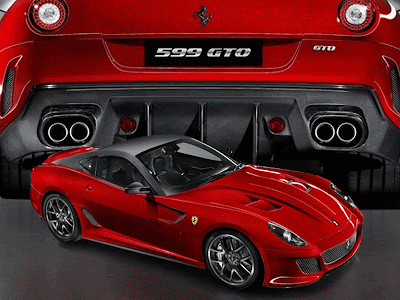
2011 Ferrari 599 GTO Sports Car Concept

The Ferrari 599 GTO is, in fact, the company's fastest ever road car. It is an exclusive limited edition special which, in true Ferrari tradition, is a completely new concept, albeit inspired by a production car. In fact the Ferrari 599 GTO is based on the 599XX, the advanced experimental track car, and can be considered almost a road-going version. The Ferrari 599 GTO is reserved for just 599 clients who seek the maximum expression of high-performance driving. The Ferrari 599 GTO benefits directly from the technological transfer from racing and set a record lap time at Fiorano in 1'24".
2011 Ferrari 599 GTO
The Fiorano lap time provides just one indication of the potential of this car. Just as significant are the technical specifications - 670 hp in a 1495kg car represents a weight-to-power ratio of just 2.23 kg/hp, and ensures a 0-100 km/h acceleration time of just 3.35" as well as a top speed of over 335 km/h.
As is Ferrari's policy, every new Ferrari features new solutions for a road car. Thus the Ferrari 599 GTO is equipped with the latest, second-generation carbon-ceramic brakes which are lighter and offer better performance, new aerodynamic innovations, such as the wheel doughnuts which increase aerodynamic efficiency as well as improve brake cooling, and the Super sport tyres developed by Michelin include a wider front tyre for greater roadholding. The driver-car interface is also new with the adoption of the Virtual Race Engineer (VRE) which provides the driver with instantaneous information on performance.
The GTO (Gran Turismo Omologata) moniker instantly calls to mind two Ferraris that have entered the collective imagination as symbols of performance. After the 1962 250 GTO, which swept the boards in GT racing categories in the 1960s and is now a highly prized collector's car, came the iconic 1984 GTO, which basically invented the entire modern supercar genre.
The web special includes photos, videos and interviews on the new car, while an exclusive preview for a small number of Ferrari clients will be held on April 14th at the Military Academy in Modena. The public debut of the Ferrari 599 GTO will instead be at the Beijing International Motor Show at the end of April.
The Ferrari 599 GTO's engine is directly derived from the 599XX unit implementing, however, the necessary modifications for road-going homologation. It thus complies with Euro 5 and LEV 2 standards. The 5999 cc 65-degree V12 engine punches out 670 CV at 8250 rpm with maximum torque of 620 Nm at 6500 rpm and there is a smooth, constant rush of power all the way to the redline with no loss of flexibility even at medium and low revs. This result was obtained by working on the fluid-dynamics and components to reduce internal friction and by adopting, amongst other things, the 599XX's redesigned crankshaft. The car also has a racing-type intake system with a new manifold with diffuser-type intake geometry and short inlet tracts designed to improve power delivery at high revs and reduce losses. To maximise volumetric efficiency per cylinder, a connection between the two plenums at the front compensates for variations in the volume. This is how the engineers managed to achieve maximum performance at high engine speeds. The engine sound inside the car is carefully controlled to balance the intake sound with the exhaust, which features a 599XX-derived 6-into-1 manifold.
The Ferrari 599 GTO inherits much of the development work - using the same principles as employed in F1 - that went into making the 599XX such an extreme performance car. Reducing weight was a vital objective and the result was the widespread use of composites and components manufactured with technologies more akin to racing specifications. The areas involved include the bodywork and greenhouse (with thinner gauge aluminium and thinner glass), the brakes, transmission and exhaust system. The result is a dry weight of 1495 kg and a weight-to-power ratio of just 2.23 kg/hp, a very significant figure that underlines the GTO's performance potential.
The Ferrari 599 GTO's aerodynamics have benefited significantly from Ferrari engineers' experience in F1 and with the 599XX which allowed downforce to be greatly increased without impacting on drag. Thanks to solutions transferred from the track car to the road-going version, the GTO generates downforce of 144 kg at 200 km/h. The entire car was honed, including the front, the sides, the flat underbody and cooling flows. In the latter instance, the GTO can count on improved ducting to the brake discs and pads, and the adoption of wheel doughnuts - a disc positioned outside the brake disc that ensure that hot air exiting the wheelarch stays as close to the body of the car as possible to reduce drag.
The new CCM2 braking system is lighter and even more consistent in high performance situations. Its consistent coefficient of attrition meant that the ABS could be calibrated to a particularly high performance level, further reducing lap times, thanks to improved deceleration and shorter stopping distances. In fact, the Ferrari 599 GTO boasts an excellent 100 to 0 km/h braking distance of just 32.5 metres. As well as their role in improving aerodynamics, the Formula 1-derived wheel doughnuts also improve braking efficiency by optimising brake cooling.
The car-driver interface was designed to maximise car and driver performance with a layout of the main commands that ensures absolute efficiency and minimum distraction. The Racing manettino also puts the emphasis firmly on sporty, track-specific driving settings by offering the driver full choice with regard to the electronic control parameters. The ICE position on the Ferrari 599 GTB Fiorano has been replaced by CT-Off (traction control off). The GTO is also fitted with bespoke, longer carbon-fibre F1 paddles for easier use in high-speed driving. In addition the GTO also features the Virtual Race Engineer, a system that monitors the status of the car and gives the driver immediate visibility of vehicle performance.

2011 Ferrari 599 GTO Sports Car Concept

The Ferrari 599 GTO is, in fact, the company's fastest ever road car. It is an exclusive limited edition special which, in true Ferrari tradition, is a completely new concept, albeit inspired by a production car. In fact the Ferrari 599 GTO is based on the 599XX, the advanced experimental track car, and can be considered almost a road-going version. The Ferrari 599 GTO is reserved for just 599 clients who seek the maximum expression of high-performance driving. The Ferrari 599 GTO benefits directly from the technological transfer from racing and set a record lap time at Fiorano in 1'24".
2011 Ferrari 599 GTO
The Fiorano lap time provides just one indication of the potential of this car. Just as significant are the technical specifications - 670 hp in a 1495kg car represents a weight-to-power ratio of just 2.23 kg/hp, and ensures a 0-100 km/h acceleration time of just 3.35" as well as a top speed of over 335 km/h.
As is Ferrari's policy, every new Ferrari features new solutions for a road car. Thus the Ferrari 599 GTO is equipped with the latest, second-generation carbon-ceramic brakes which are lighter and offer better performance, new aerodynamic innovations, such as the wheel doughnuts which increase aerodynamic efficiency as well as improve brake cooling, and the Super sport tyres developed by Michelin include a wider front tyre for greater roadholding. The driver-car interface is also new with the adoption of the Virtual Race Engineer (VRE) which provides the driver with instantaneous information on performance.
The GTO (Gran Turismo Omologata) moniker instantly calls to mind two Ferraris that have entered the collective imagination as symbols of performance. After the 1962 250 GTO, which swept the boards in GT racing categories in the 1960s and is now a highly prized collector's car, came the iconic 1984 GTO, which basically invented the entire modern supercar genre.
The web special includes photos, videos and interviews on the new car, while an exclusive preview for a small number of Ferrari clients will be held on April 14th at the Military Academy in Modena. The public debut of the Ferrari 599 GTO will instead be at the Beijing International Motor Show at the end of April.
The Ferrari 599 GTO's engine is directly derived from the 599XX unit implementing, however, the necessary modifications for road-going homologation. It thus complies with Euro 5 and LEV 2 standards. The 5999 cc 65-degree V12 engine punches out 670 CV at 8250 rpm with maximum torque of 620 Nm at 6500 rpm and there is a smooth, constant rush of power all the way to the redline with no loss of flexibility even at medium and low revs. This result was obtained by working on the fluid-dynamics and components to reduce internal friction and by adopting, amongst other things, the 599XX's redesigned crankshaft. The car also has a racing-type intake system with a new manifold with diffuser-type intake geometry and short inlet tracts designed to improve power delivery at high revs and reduce losses. To maximise volumetric efficiency per cylinder, a connection between the two plenums at the front compensates for variations in the volume. This is how the engineers managed to achieve maximum performance at high engine speeds. The engine sound inside the car is carefully controlled to balance the intake sound with the exhaust, which features a 599XX-derived 6-into-1 manifold.
The Ferrari 599 GTO inherits much of the development work - using the same principles as employed in F1 - that went into making the 599XX such an extreme performance car. Reducing weight was a vital objective and the result was the widespread use of composites and components manufactured with technologies more akin to racing specifications. The areas involved include the bodywork and greenhouse (with thinner gauge aluminium and thinner glass), the brakes, transmission and exhaust system. The result is a dry weight of 1495 kg and a weight-to-power ratio of just 2.23 kg/hp, a very significant figure that underlines the GTO's performance potential.
The Ferrari 599 GTO's aerodynamics have benefited significantly from Ferrari engineers' experience in F1 and with the 599XX which allowed downforce to be greatly increased without impacting on drag. Thanks to solutions transferred from the track car to the road-going version, the GTO generates downforce of 144 kg at 200 km/h. The entire car was honed, including the front, the sides, the flat underbody and cooling flows. In the latter instance, the GTO can count on improved ducting to the brake discs and pads, and the adoption of wheel doughnuts - a disc positioned outside the brake disc that ensure that hot air exiting the wheelarch stays as close to the body of the car as possible to reduce drag.
The new CCM2 braking system is lighter and even more consistent in high performance situations. Its consistent coefficient of attrition meant that the ABS could be calibrated to a particularly high performance level, further reducing lap times, thanks to improved deceleration and shorter stopping distances. In fact, the Ferrari 599 GTO boasts an excellent 100 to 0 km/h braking distance of just 32.5 metres. As well as their role in improving aerodynamics, the Formula 1-derived wheel doughnuts also improve braking efficiency by optimising brake cooling.
The car-driver interface was designed to maximise car and driver performance with a layout of the main commands that ensures absolute efficiency and minimum distraction. The Racing manettino also puts the emphasis firmly on sporty, track-specific driving settings by offering the driver full choice with regard to the electronic control parameters. The ICE position on the Ferrari 599 GTB Fiorano has been replaced by CT-Off (traction control off). The GTO is also fitted with bespoke, longer carbon-fibre F1 paddles for easier use in high-speed driving. In addition the GTO also features the Virtual Race Engineer, a system that monitors the status of the car and gives the driver immediate visibility of vehicle performance.
Related Posts Plugin for WordPress, Blogger...